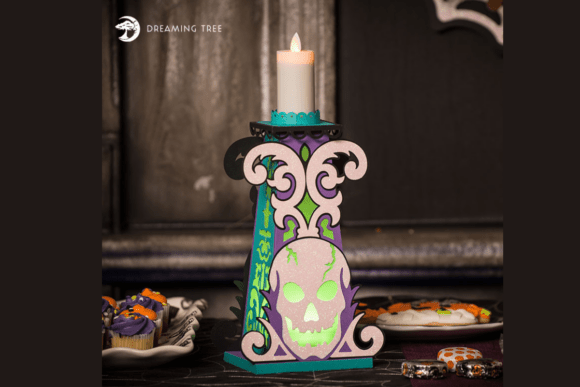
Mastering the Skull Candle Holder SVG for Professional Halloween Décor
Integrating digital design files into physical crafts requires more than just a cutting machine; it demands a clear understanding of material behavior, assembly logic, and spatial planning. The Skull Candle Holder SVG represents a sophisticated intersection of gothic aesthetics and structural engineering, offering creators a pathway to produce high-end seasonal décor without the steep learning curve typically associated with complex 3D paper sculptures. This design is not merely a cut-out shape but a layered luminary system designed to house two flameless tealights—one nestled within the skull’s cranium and another perched atop a tower-like structure. For professionals, educators, and small business owners, understanding how to efficiently process this file can streamline production workflows and elevate the perceived value of handmade goods.
Understanding the Design Architecture
Before initiating any cut, it is crucial to analyze the structural intent of the Skull Candle Holder SVG. Unlike flat decals or simple ornaments, this project relies on depth and layering to create its eerie yet elegant ambiance. The design is optimized for 12×12 inch cutting machines, including popular models like the Cricut, Silhouette Cameo, and Brother ScanNCut. This compatibility ensures that users with standard equipment can execute the project without needing industrial-sized hardware.
The final dimensions of the assembled piece stand at 10.75 inches in height, 6.25 inches in width, and 4.5 inches in depth. These proportions are significant for planners who need to consider display space, packaging requirements, or shipping constraints if the item is intended for sale. The verticality of the tower structure draws the eye upward, making it an ideal centerpiece for mantels, entryway tables, or haunted house vignettes. By recognizing the spatial footprint early in the planning phase, creators can better allocate resources and prepare their workspace for assembly.
Material Selection and Preparation Workflow
The quality of the final output is directly proportional to the materials used. This specific design calls for a precise inventory of cardstock and specialty papers. Using the recommended Encore Cardstock 80 lb cover (216 gsm) ensures that the layers hold their shape under the weight of the structure while remaining flexible enough for intricate folding. Thinner papers may collapse under their own weight, while heavier stocks might resist the fine details of the skull’s features.
To maintain efficiency, organize your supply list before opening your design software. The project requires:
- 11 sheets of 12×12 Black Cardstock for the primary structural layers.
- 3 sheets of 12×12 Amethyst Cardstock to add depth and subtle color variation.
- 2 sheets of 12×12 Black Cardstock (additional reserve).
- 2 sheets of 12×12 Cascade Cardstock for contrasting accents.
- 2 sheets of 8.5×11 Green Vellum Paper to diffuse light softly.
- 1 sheet of 12×12 White Glitter cardstock for highlighting specific details.
- 2 flameless tealights for safe, consistent illumination.
- Ink glue for precise adhesion.
For those looking to source high-quality materials, visiting a specialized 12×12 Cardstock Shop can ensure consistency in texture and weight. Consistency is key in multi-layer projects; varying thicknesses between sheets can lead to misalignment during assembly. Pre-cutting your vellum and glitter paper to size before loading them into the machine can also save time, as these materials often require different handling techniques than standard cardstock.
Digital Setup and Cutting Optimization
When importing the Skull Candle Holder SVG into your cutting software, attention to detail prevents costly errors. The file includes a handy PDF legend, which serves as a critical reference tool. This legend helps identify each piece by color and layer number, reducing cognitive load during the assembly phase. Before sending the job to the cutter, review the placement of each element on the virtual mat. Grouping similar colors together can minimize material waste and reduce the number of mat loads required.
Although the design is built for 12×12 machines, it is resizable. However, users should note that resizing may alter the structural integrity or the fit of the interlocking tabs. If scaling is necessary for a specific client request or display constraint, perform a test cut on scrap paper first. This step verifies that the glue tabs still align correctly and that the tealight compartments remain functional. For most users, sticking to the original dimensions ensures the best balance between aesthetic impact and structural stability.
Assembly Strategy and Quality Control
Assembly is where the digital design transforms into a tangible object. The inclusion of a step-by-step video tutorial is a valuable resource that should be utilized throughout the process, not just at the beginning. Watching the assembly technique before starting allows you to anticipate tricky folds or tight spaces where glue application must be precise.
Begin with the base layers, ensuring that each fold is crisp and accurate. Use a bone folder or a similar tool to crease the cardstock sharply. As you build upward, frequently check the alignment against the PDF legend. The use of ink glue is recommended over liquid glues because it dries clear and offers a longer working time for repositioning pieces. Apply glue sparingly to avoid warping the paper, especially when working with the vellum layers.
The integration of the two flameless tealights is a critical functional aspect. One light sits inside the skull, illuminating the eye sockets and nasal cavity from within, while the other rests atop the tower, casting a glow over the entire structure. Ensure that the compartments for these lights are free of excess glue or paper debris that could obstruct the fit. Testing the lights before final closure of any sealed sections is a prudent quality control measure.
Integrating into Broader Creative and Business Workflows
For entrepreneurs and small business owners, the Skull Candle Holder SVG fits seamlessly into a seasonal product line. Its gothic elegance appeals to a demographic that values sophisticated Halloween décor over childish spooky themes. When pricing such items, factor in the time spent on assembly, which is more labor-intensive than flat paper crafts. The perceived value, however, justifies a higher price point due to the complexity and visual impact of the 3D design.
Educators and workshop leaders can use this project to teach advanced paper crafting techniques. The layered construction offers lessons in geometry, spatial reasoning, and patience. By breaking down the assembly into manageable stages, instructors can guide students through the process of transforming a 2D digital file into a 3D object. The PDF legend serves as an excellent teaching aid, helping students learn to follow technical diagrams—a skill transferable to many other disciplines.
For hobbyists and home decorators, this project offers a satisfying weekend activity that results in a durable, reusable decoration. Unlike perishable pumpkins or fragile glass ornaments, this paper sculpture can be stored flat and reassembled year after year. Proper storage involves keeping the layers separated by acid-free tissue paper to prevent creasing or color transfer.
Long-Term Utility and Adaptation
Beyond Halloween, the design principles behind this skull luminary can inspire other projects. The technique of using vellum to diffuse light can be applied to lanterns, lampshades, or window displays. The layering method used here is applicable to various 3D paper art forms, from topographic maps to architectural models. By mastering this specific Skull Candle Holder SVG, creators build a toolkit of skills that enhance their overall crafting proficiency.
Furthermore, the digital nature of the SVG file allows for easy customization. Users with advanced design skills can modify the cut lines to incorporate personal monograms, different facial expressions, or alternative tower shapes. This flexibility makes the file a versatile asset in a digital library, capable of evolving with the creator’s growing expertise.
In conclusion, the successful execution of this project relies on careful preparation, adherence to material specifications, and methodical assembly. By treating the Skull Candle Holder SVG as a structured workflow rather than a simple craft, users can achieve professional-grade results that enhance their seasonal décor or product offerings. The combination of detailed instructions, compatible file formats, and thoughtful design makes this an accessible yet rewarding challenge for anyone looking to elevate their paper crafting game.