Butterfly Fingerless Gloves: A Practical Guide to Whimsical Knitting
In the realm of handcrafted accessories, few items balance functional utility with artistic expression as effectively as fingerless gloves. Among the myriad of designs available to modern knitters, Butterfly Fingerless Gloves have emerged as a distinctive project that appeals to both aesthetic sensibilities and technical curiosity. This design is not merely a variation on a standard mitten; it represents a thoughtful integration of structural knitting techniques with three-dimensional embellishment. For creators seeking to expand their repertoire beyond basic garments, this pattern offers a compelling case study in combining comfort, creativity, and manageable complexity.
The appeal of these gloves lies in their accessibility. Unlike many intricate glove patterns that require proficiency in double-pointed needles or the magic loop method, this specific design is worked flat on straight needles. This approach lowers the barrier to entry for intermediate knitters or those who prefer the tactile familiarity of turning work at the end of every row. By utilizing worsted weight yarn, the project moves quickly enough to remain engaging without becoming tedious, making it an ideal candidate for weekend crafting or thoughtful gift production.
Design Mechanics and Construction Methodology
Understanding the construction of Butterfly Fingerless Gloves is essential for appreciating their durability and fit. The primary body of the glove is knit as a flat panel, which is then seamed along the side. This technique provides several practical advantages. First, it allows the knitter to easily adjust the width of the glove to accommodate different hand sizes without recalculating complex circular stitch counts. Second, flat knitting often results in a more consistent tension for those who are still developing their skills with circular tools.
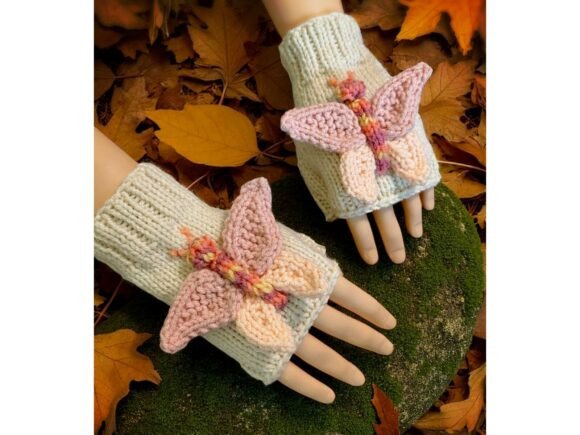
The defining feature, naturally, is the butterfly motif. In this pattern, the butterfly’s body is integrated directly into the fabric of the glove during the knitting process. This ensures that the central element is secure and does not rely solely on adhesive or superficial attachment, which can fail over time with regular wear. The wings, however, are created as separate components. This modular approach is a significant strength of the design. By knitting the wings separately and sewing them on afterward, the creator achieves a charming 3D effect that adds depth and movement to the accessory. It also allows for color experimentation; one might choose contrasting yarns for the wings to make them pop, or tonal variations for a more subtle, cottagecore-inspired look.
Material Selection and Yarn Performance
The recommendation to use worsted weight yarn is not arbitrary. Worsted weight offers an optimal balance between warmth and dexterity. Heavier bulky yarns might restrict finger movement and create a cumbersome glove, while finer fingering weights would require significantly more time and precision to achieve the same structural integrity. When selecting materials for Butterfly Fingerless Gloves, consider fibers that offer some elasticity, such as merino wool blends. Elasticity is crucial for fingerless gloves to ensure they stay up on the wrist and hug the hand without slipping down during use.
Acrylic blends can also be effective, particularly for those with wool allergies or for items intended for frequent washing. However, natural fibers generally provide better breathability and temperature regulation. The texture of the yarn also plays a role in the final presentation. A smooth, plied yarn will highlight the stitch definition of the butterfly body, while a slightly haloed mohair blend could soften the appearance of the wings, enhancing the whimsical nature of the design.
Usability and Real-World Application
Beyond their visual appeal, these gloves serve a genuine functional purpose. Fingerless gloves are indispensable for individuals who need manual dexterity while maintaining hand warmth. Professionals who work in cooler environments, such as archivists handling documents, artists sketching in unheated studios, or remote workers typing in drafty home offices, will find the design highly practical. The open-finger configuration allows for precise tactile feedback, which is essential for tasks ranging from smartphone usage to intricate craft work.
The durability of the Butterfly Fingerless Gloves depends largely on the finishing techniques employed. Because the wings are sewn on, it is advisable to use a mattress stitch or a similar invisible seam method to attach them securely. Reinforcing the attachment points with extra passes of the needle can prevent the wings from catching on objects and tearing off. While the 3D elements add character, users should be aware that highly textured embellishments may snag on rough surfaces. Therefore, these gloves are best suited for casual wear, creative pursuits, and social occasions rather than rigorous outdoor labor.
Learning Curve and Educational Value
For educators and hobbyists looking to refine their skills, this pattern serves as an excellent teaching tool. It introduces several key concepts without overwhelming the learner. The flat construction reinforces basic knit and purl stitches, while the assembly phase teaches important finishing skills such as seaming and weaving in ends. The inclusion of a step-by-step video tutorial further supports the learning process, providing visual clarification for techniques that written instructions may not fully convey.
The project is particularly beneficial for knitters who are hesitant to try knitting in the round. By mastering the flat construction of these gloves, builders gain confidence in shaping and sizing, which can later be translated to more complex circular projects. Furthermore, the modular nature of the butterfly wings encourages experimentation. Once the basic technique is mastered, creators can modify the wing shape, size, or color, fostering a sense of ownership and creative agency over the final product.
Target Audience and Gift Potential
Who benefits most from creating or owning Butterfly Fingerless Gloves? The design resonates strongly with individuals who appreciate the cottagecore aesthetic—a style that celebrates rural life, nostalgia, and natural motifs. It is also an ideal project for gift-givers. Handmade gifts carry an inherent emotional value, and the unique, eye-catching nature of these gloves makes them memorable. They are suitable for friends, family members, or colleagues who enjoy quirky, personalized accessories.
Small business owners and Etsy sellers may also find this pattern commercially viable. The relatively quick turnaround time due to the worsted weight yarn and flat construction allows for efficient production. Moreover, the customizable nature of the wings enables sellers to offer variations, catering to diverse customer preferences. However, it is important to price these items appropriately, accounting for the additional time required for the assembly and embellishment phases.
Limitations and Considerations
While the design is robust, potential makers should acknowledge certain limitations. The 3D wings, while visually striking, add bulk. This may make the gloves less suitable for wearing under tight sleeves or coats. Additionally, the seams along the side of the glove must be executed carefully to avoid irritation against the skin. A poorly finished seam can cause discomfort during extended wear.
Another consideration is care instructions. Due to the mixed construction of knitted fabric and sewn embellishments, hand washing is recommended to maintain the shape and integrity of the wings. Machine washing could lead to felting or distortion, particularly if natural fibers are used. Clear communication of care requirements is essential if these gloves are being gifted or sold.
Final Assessment
Butterfly Fingerless Gloves represent a well-conceived intersection of form and function. They offer a refreshing alternative to standard winter accessories, providing warmth without sacrificing dexterity. The decision to work the pattern flat on straight needles makes it accessible to a broader range of knitters, while the separate wing construction allows for creative customization and a professional-looking 3D finish. Whether viewed as a personal creative outlet, a skill-building exercise, or a unique gift option, this pattern delivers consistent value. For those willing to invest a modest amount of time in finishing details, the result is a durable, charming accessory that stands out in both appearance and utility.